
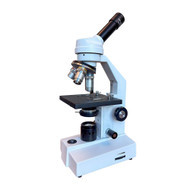
Student Microscope Buying Guide: How to Choose the Right Microscope for School
Jul 23rd 2026
Whether you're shopping for a first microscope for an elementary student, preparing for high school biology, or purchasing equipment for a college science course, choosing the right microscope can make learning more engaging and enjoyable.
With so many models available, it's easy to assume the microscope with the highest magnification is the best choice. In reality, image quality, durability, and ease of use matter far more than an impressive number printed on the box.
This student microscope buying guide explains what features really matter, the different types of microscopes available, and how to choose the best microscope for students at every education level.
What Is a Student Microscope?
A student microscope is designed specifically for educational use. It combines quality optics, simple operation, and durable construction at a price that's appropriate for schools, homeschool families, and individual students.
Unlike inexpensive toy microscopes, quality student microscopes are capable of producing clear, detailed images that allow students to observe real biological specimens while developing proper laboratory skills.
Most student microscopes include:
- Glass optical lenses
- LED illumination
- Multiple magnification levels
- Durable metal construction
- Easy-to-use focusing controls
These features allow students to confidently examine prepared slides and complete classroom assignments for years.
Did You Know?
A well-built student microscope can often last from middle school through college with proper care.
Which Microscope Is Right for Your Grade Level?
Not every student needs the same microscope. A microscope that's perfect for a college biology major may be unnecessarily advanced for an elementary classroom.
|
Student Level |
Recommended Microscope |
Typical Magnification |
|
Elementary School |
Stereo microscope or basic compound microscope |
10x to 40x (stereo) or up to 400x |
|
Middle School |
Compound microscope |
40x to 400x |
|
High School Biology |
Compound microscope |
40x to 1000x |
|
College Biology |
Compound microscope with mechanical stage |
40x to 1000x |
|
Advanced Science Courses |
Binocular compound microscope |
40x to 1000x |
For most middle school, high school, and introductory college science classes, a compound microscope with 400x to 1000x magnification provides everything students need.
The Five Features Every Student Microscope Should Have
Not all student microscopes are built the same. Before purchasing one, look for these essential features.
Glass Optics
The quality of the lenses has one of the biggest impacts on image clarity.
Glass objectives produce sharper images with better color and improved detail than plastic lenses commonly found on inexpensive microscopes.
When viewing plant cells, bacteria, or microorganisms, the difference is immediately noticeable.
LED Illumination
Modern LED lighting has become the standard for educational microscopes.
LED illumination offers several advantages:
- Bright, even lighting
- Long operating life
- Minimal heat generation
- Lower maintenance than traditional bulbs
Students can spend more time learning and less time replacing burned-out bulbs.
Durable Metal Construction
Classroom microscopes experience plenty of handling.
Metal frames provide better stability, reduce vibration, and withstand years of regular use much better than lightweight plastic microscopes.
A durable frame also helps maintain optical alignment over time.
Mechanical Stage
As students begin studying biology, moving slides precisely becomes increasingly important.
A mechanical stage allows the specimen to move smoothly in small increments without touching the slide directly.
This is especially helpful when observing:
- Blood cells
- Bacteria
- Tissue samples
- Pond water organisms
Quality Objectives Instead of Inflated Magnification
Many inexpensive microscopes advertise magnifications of 2000x or even 2500x.
While those numbers sound impressive, they rarely provide additional useful detail because image resolution is limited by the quality of the optics.
For most educational applications, a quality microscope capable of 400x to 1000x magnification produces much better results than a poorly built microscope advertising much higher magnification.
Buying Tip
Focus on image quality, not the biggest magnification number on the box.
Compound vs. Stereo Student Microscopes
One of the most common questions is whether students need a compound microscope or a stereo microscope.
The answer depends entirely on what they'll be studying.
|
Compound Microscope |
Stereo Microscope |
|
Cells |
Rocks |
|
Blood samples |
Coins |
|
Bacteria |
Leaves |
|
Plant tissue |
Insects |
|
Prepared slides |
Minerals |
|
Pond water |
Electronic components |
A compound microscope uses transmitted light to examine very thin specimens at higher magnifications.
A stereo microscope uses reflected light to provide a three-dimensional view of larger objects.
For biology classes, chemistry labs, and most science courses, a compound microscope is the best choice.
Stereo microscopes are better suited for earth science, entomology, electronics, and hobby applications.
Common Mistakes When Buying Student Microscopes
Avoiding a few common mistakes can help students get much more value from their microscope.
Buying Based Only on Magnification
Higher magnification doesn't automatically mean better performance.
Sharp optics and proper lighting produce clearer images than excessive magnification.
Choosing a Toy Microscope
Toy microscopes may be inexpensive, but they often produce blurry images and lack the precision needed for classroom assignments.
Students can quickly become frustrated when they can't clearly see the specimens they're supposed to study.
Ignoring Build Quality
A microscope that constantly shifts focus or wobbles during use makes learning more difficult.
Quality construction helps maintain image stability and extends the life of the microscope.
Forgetting Future Coursework
Many parents purchase the least expensive microscope available, only to replace it a year or two later.
Choosing a slightly higher-quality student microscope often allows it to remain useful through high school and even introductory college biology.
Overlooking Customer Support
Educational equipment occasionally needs replacement bulbs, accessories, or maintenance.
Buying from a knowledgeable microscope dealer makes it much easier to find compatible parts and receive technical support if needed.
What Can You Actually See with a Student Microscope?
One of the most exciting parts of owning a microscope is discovering the hidden details of everyday objects.
Here's what students can expect to observe.
|
Specimen |
Recommended Magnification |
|
Onion cells |
100x |
|
Cheek cells |
400x |
|
Plant stems |
100x to 400x |
|
Pond water microorganisms |
100x to 400x |
|
Blood cells |
400x to 1000x |
|
Pollen |
400x |
|
Textile fibers |
100x |
|
Hair strands |
100x to 400x |
Students are often surprised by the incredible amount of detail hidden within ordinary objects found around the home or classroom.
Our Recommendation for Most Students
For students taking middle school, high school, or introductory college biology courses, a quality compound microscope offers the best combination of performance, durability, and value.
The Richter Optica HS-1M Student Microscope is an excellent example of a microscope designed specifically for education. With quality glass optics, LED illumination, sturdy construction, and the magnification needed for common classroom specimens, it provides a dependable learning experience without unnecessary complexity.
If you're comparing different options, browse Microscope World's collection of Student Microscopes to find different models and brands suited for every grade level, from first-time users to advanced biology students.
Frequently Asked Questions About Student Microscopes
What is the best microscope for students?
The best student microscope depends on the student's grade level and coursework. For most middle school, high school, and introductory college biology classes, a quality compound microscope with glass optics and LED illumination is the ideal choice.
What magnification do students need?
Most educational applications require between 40x and 1000x magnification. This range allows students to study plant cells, microorganisms, blood cells, and prepared biological slides.
Are digital microscopes good for students?
Digital microscopes can be excellent for demonstrations, presentations, and sharing images on a computer. However, traditional compound microscopes remain the preferred choice for many biology classes because they provide higher optical quality for viewing prepared slides.
Is 1000x magnification enough?
Yes. A quality microscope capable of 1000x magnification is suitable for nearly all middle school, high school, and introductory college biology coursework.
Can students see bacteria with a microscope?
Many larger bacteria can be observed using a quality compound microscope at 1000x magnification, especially when properly prepared and stained. However, identifying specific bacteria typically requires more advanced laboratory equipment and techniques.
Should I buy a monocular or binocular microscope?
Monocular microscopes are lightweight, affordable, and work well for most students. Binocular microscopes provide greater viewing comfort during extended laboratory sessions and are often preferred by college students and advanced users.
What's the difference between a student microscope and a professional microscope?
Professional microscopes typically offer higher-quality optics, more advanced illumination systems, specialized objectives, and expanded research capabilities. Student microscopes are designed to provide excellent educational performance while remaining affordable and easy to operate.
How much should a good student microscope cost?
A quality student microscope is an investment in years of learning. While prices vary depending on features and optical quality, choosing a well-built microscope from a trusted manufacturer brand often provides better long-term value than purchasing the least expensive option available.
Choosing the Right Student Microscope
The best student microscope isn't necessarily the one with the highest magnification or the longest list of features. It's the one that delivers clear images, stands up to regular use, and supports a student's educational journey as their skills grow.
Whether you're shopping for an aspiring young scientist, preparing for a high school biology course, or equipping a college laboratory, investing in a quality microscope helps students build confidence while exploring the microscopic world.
Explore Microscope World's selection of Student Microscopes to find dependable instruments designed for classrooms, homeschool programs, and future scientists alike.


