
Student Microscopes: 7 Best Tips for Selection
Mar 26th 2025
Best Microscope for Students
If you’re looking for a reliable microscope for school use, a compound binocular microscope designed for students is typically the best option.
One of the most popular choices for students is:
Richter Optica HS-1M Student Microscope
Easy to use for beginners
Ideal for middle and high school students
Durable for classroom use
This type of microscope provides the
…
How to Clean a Microscope
Mar 25th 2025
Microscope maintenance is crucial for ensuring accurate observations and prolonging the life of your valuable instrument. When cleaning a microscope, you'll want to approach the task with care, precision, and the right tools. Here are the most important steps for basic cleaning:
Preparation is Key
Always work in a clean, dust-free area when cleaning your microscope.
Wash and dry your hands thorou
…
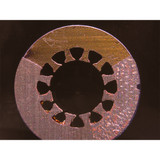
Stereo Microscope Inspection Guide for Quality Control
Mar 24th 2025
Why Use a Stereo Microscope?
A stereo microscope provides critical advantages over naked eye inspection for quality control.
Magnifies surface details 10-40x larger than visible to human eye.
Creates a 3D view of surface parts.
Allows precise detection of minute defects impossible to see otherwise.
Provides consistent, objective assessment of quality
Reduces human error in visual inspection.
Ins
…
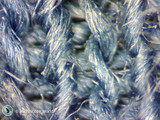
What Are Stereo Microscopes Used For?
Mar 24th 2025
Discovering the World of Stereo Microscopes: A Close-Up Adventure
Imagine having a superpower that lets you see incredibly tiny details of objects without squishing or changing them - that's exactly what a stereo microscope does! Unlike traditional microscopes that look at super tiny cells, stereo microscopes are designed to give you a 3D view of larger small things with some amazing applications:
…
What is a Microscope Used For?
Mar 20th 2025
Microscopes are used to magnify and observe tiny objects, organisms, and structures that are too small to be seen with the naked eye, allowing scientists and students to explore and understand the microscopic world.
What is the Purpose of a Microscope in Scientific Discovery?
Light microscopes are essential scientific instruments that allow us to see objects too small for the naked eye. These powe
…

How to Center a Microscope Condenser: Step-by-Step Guide
Mar 20th 2025
A Step-by-Step Guide on How to Center your Microscope Condenser
A compound light microscope focuses the light through a condenser beneath the microscope stage. Follow these steps to center your microscope condenser.
Start with the Basics- Ensure the microscope is on a stable surface.- Use the 4x objective (lowest magnification) to start- Make sure the condenser is raised up all the way. View info
…
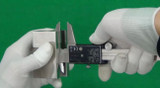
How to Measure Steps with a Digital Caliper
Mar 9th 2025
Because of their industry standard accuracy of 0.01mm and ease of use, calipers are indispensable measurement instruments that are frequently utilized. In addition to preventing misreading, digital calipers are an essential first step in gathering measurement data toward loT-driven measurement collection.
How to Measure Steps with a Digital Caliper
The video below details how to perform step measu
…
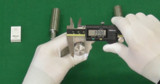
How to Use Digital Calipers
Mar 9th 2025
Calipers are essential measuring tools that are widely used for their ease of use and 0.01mm precision, making them an industry standard. Digital calipers not only help prevent misreading but also serve as a key step toward loT-driven measurement data collection.
How to Use a Digital Caliper
The video below details how to properly use a digital caliper for direct measurement and comparative measur
…
Microscopes
Mar 3rd 2025
A microscope is a scientific instrument that magnifies small objects, making them visible to the human eye. It is used to study cells, microorganisms, tissues, and materials in science, medicine, and education. From the cells in a leaf to the intricate structures of microorganisms, microscopes reveal the unseen and help scientists, students, and hobbyists understand the microscopic universe. Wheth
…

A Comprehensive Guide to Confocal Microscopes
Jan 16th 2025
Confocal microscopes are essential tools in scientific research and industrial applications, offering unparalleled imaging precision and clarity. In this guide, we’ll explore what confocal microscopes are, how they work, their applications, and the different types available to suit various needs.
What is a Confocal Microscope?
A confocal microscope is an advanced optical imaging device desig
…

What Is a Digital Microscope?
Dec 19th 2024
A digital microscope is an advanced optical device that combines the traditional functionality of a microscope with modern digital imaging technology. Unlike conventional microscopes, which use eyepieces to observe specimens, a digital microscope captures images and videos of the magnified subject and displays them on a computer screen or built-in monitor. This technology not only makes viewing mo
…
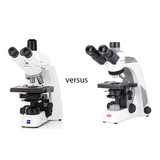
Microscope Image Comparison: ZEISS Primostar versus Motic Panthera
Nov 17th 2024
Recently, we looked at images on two different microscope systems: the ZEISS Primostar 3 and the Motic Panthera. We wanted to compare the images captured with both of these microscopes.
For both microscopes, the same digital camera was used to capture the images, a 5 megapixel microscope camera (the DCM5.3). Images displayed were captured with a 100x objective lens. For the ZEISS Primostar 3, the
…
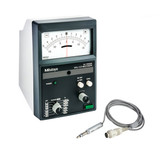
Mitutoyo Mu Checker Systems Explained
Oct 27th 2024
How does Mitutoyo's Mu checker System Work?
The Mu checker uses the following measurement principle: a differential inductance displacement sensor, which is energized by a 5 kHz AC exciting voltage, is applied across two identical coils connected in series, L1 and L2. An iron core, which is connected to the probe stylus, moves close to both coils. The impedance of each coil varies depending on it
…
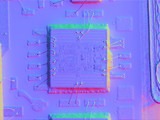
Solino Anomaly Detection Images and 3D Images
Sep 30th 2024
Solino: Anomaly Detection & 3D Imaging
Opto's Solino is a vision imaging sensor that captures object anomalies and 3D images for use in quality control and assurance, automation of manufacturing processes, preventative maintenance, and inspection of fingerprints, dents, cracks, stains, etc.
Solino finds defects beyond the limits of human perception. Solino detects roughness, reflectivity
…
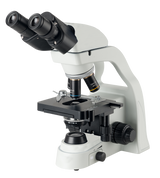
What is a Microscope?
Sep 17th 2024
What is a Microscope?
A microscope is an instrument used to magnify objects that can't be viewed with the naked eye or need a bit more magnification in order to see them better.
What can I view with a Light Microscope?
The image below shows a range of sizes from 1 meter to 0.1 nanometers. The human eye can view bats, bugs, and strands of hair. A light microscope helps to magnify blood cells and ba
…


