
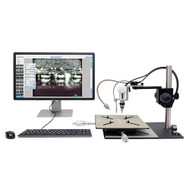
The Role of Stereo Microscopes in Semiconductor Packaging & Microelectronics Failure Analysis
Apr 20th 2026
As semiconductor devices continue to shrink in size while increasing in complexity, the need for precise inspection tools has never been greater. From advanced packaging techniques to high-density microelectronics, even the smallest defect can lead to performance issues or complete device failure.
Stereo microscopes play a critical role in identifying these issues early, making them an essential tool in semiconductor packaging and microelectronics failure analysis.
What Is a Stereo Microscope?
A stereo microscope, also known as a dissecting microscope, provides a three-dimensional view of a sample at relatively low magnification. Unlike compound microscopes, stereo microscopes use two separate optical paths to create depth perception, allowing users to examine surfaces with clarity and precision.
This makes them ideal for inspecting:
- Semiconductor wafers
- Printed circuit boards (PCBs)
- Wire bonds and solder joints
- Microelectronic components
For professionals evaluating inspection tools, stereo microscopes available at Microscope World are specifically designed for these types of applications.
Why Stereo Microscopes Are Essential in Semiconductor Packaging
Semiconductor packaging involves assembling and protecting delicate integrated circuits. This process includes wire bonding, encapsulation, and substrate attachment, all of which require precise visual inspection.
Stereo microscopes are essential because they provide:
1. True 3D Visualization
The ability to see depth is critical when inspecting:
- Bond wire placement
- Solder joint integrity
- Layer alignment
This 3D perspective allows engineers to quickly identify irregularities that would be difficult to detect with flat imaging systems.
2. Real-Time Inspection
Stereo microscopes enable immediate visual feedback during manufacturing and assembly processes. Operators can:
- Monitor alignment during component placement
- Inspect connections during rework
- Catch defects before they propagate
3. Ergonomic and Efficient Workflow
Unlike higher-magnification systems that require extensive sample preparation, stereo microscopes allow for direct observation. This improves workflow efficiency and reduces downtime in production environments.
Applications in Microelectronics Failure Analysis
Failure analysis is a critical step in improving reliability and preventing recurring defects. Stereo microscopes are often the first line of investigation before more advanced techniques are used.
Visual Inspection of Physical Damage
Stereo microscopes help identify:
- Cracked substrates
- Burn marks or overheating
- Corrosion or contamination
Solder Joint and Connection Analysis
Poor soldering is a common cause of electronic failure. With a stereo microscope, analysts can examine:
- Cold solder joints
- Bridging between connections
- Voids or incomplete bonding
Component-Level Examination
Technicians can isolate and inspect individual components on a PCB, enabling faster root cause identification.
For enhanced documentation, many facilities pair stereo systems with microscope cameras to capture high-resolution images for reporting and analysis.
Advantages Over Other Microscopy Techniques
While compound and electron microscopes have their place, stereo microscopes offer unique advantages for semiconductor and electronics work:
- No sample preparation required for most inspections
- Wide field of view for scanning larger areas quickly
- Long working distance for manipulating components during inspection
- Cost-effective compared to advanced imaging systems
These benefits make stereo microscopes an indispensable tool for both production and lab environments.
Choosing the Right Stereo Microscope for Electronics Inspection
Selecting the right microscope depends on your specific application, but key features to consider include:
- Zoom range and magnification flexibility
- Working distance for handling components
- Lighting options (LED ring lights, oblique illumination)
- Camera compatibility for documentation
Microscope World offers a wide range of stereo microscopes for electronics inspection, designed to meet the needs of engineers, technicians, and quality control teams.
Supporting Advanced Inspection Workflows
As semiconductor manufacturing evolves, stereo microscopes continue to play a foundational role alongside more advanced technologies such as scanning electron microscopy (SEM) and X-ray inspection. They serve as the first step in identifying visible defects before deeper analysis is conducted.
Their versatility, ease of use, and reliability make them a critical component of any inspection workflow.
Improving Reliability Through Better Inspection
In semiconductor packaging and microelectronics, small defects can have major consequences. Stereo microscopes provide the visibility needed to detect these issues early, reduce failure rates, and improve overall product reliability.
For organizations looking to strengthen their inspection capabilities, investing in high-quality stereo microscopy solutions is a practical and effective step toward better performance and long-term success.
When higher magnification and resolution is required, a semiconductor wafer inspection microscope is used.


