
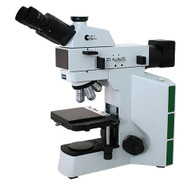
Metallurgical Microscopy for Heat-Treated Materials: Grain Size, Phase Analysis, and Documentation Standards
May 15th 2026
Heat treatment changes the internal structure of metals in ways that directly affect hardness, toughness, ductility, wear resistance, and fatigue life. Whether working with steel, aluminum, titanium, or specialty alloys, manufacturers rely on metallurgical microscopy to verify that heat-treated materials meet performance specifications and quality standards.
From grain size evaluation to phase identification and proper documentation, metallurgical microscopes are essential tools for quality control laboratories, research facilities, foundries, aerospace manufacturers, automotive suppliers, and heat treatment shops.
In this guide, we explain how metallurgical microscopy is used for heat-treated materials, what inspectors look for during analysis, and which documentation standards help ensure consistent, repeatable results.
What Is Metallurgical Microscopy?
Metallurgical microscopy is the examination of polished and etched metal samples under a microscope to evaluate microstructure. Unlike biological microscopy, metallurgical microscopy uses reflected light because metals are opaque.
A metallurgical microscope allows technicians and engineers to observe:
- Grain boundaries
- Phase distributions
- Carbides and inclusions
- Heat treatment effects
- Surface defects
- Decarburization
- Case depth
- Weld structures
- Fracture characteristics
These observations help determine whether a heat treatment process achieved the desired mechanical and metallurgical properties.
Why Heat-Treated Materials Require Microscopic Analysis
Heat treatment alters the crystalline structure of metals through controlled heating and cooling cycles. Even small process variations can significantly affect final properties.
Microscopy helps confirm whether the material contains the intended microstructure after processes such as:
- Annealing
- Quenching
- Tempering
- Normalizing
- Carburizing
- Nitriding
- Solution treating
- Aging
For example, improperly quenched steel may contain retained austenite or non-uniform martensite, while overheated materials may exhibit excessive grain growth that weakens mechanical performance.
Microscopic examination provides direct visual confirmation of these conditions.
Grain Size Analysis in Heat-Treated Metals
Why Grain Size Matters
Grain size has a major influence on mechanical properties. In general:
- Fine grains improve strength and toughness
- Coarse grains can reduce fatigue resistance
- Uniform grain structures improve consistency
Heat treatment processes can refine or enlarge grains depending on temperature and cooling rates.
Industries such as aerospace, automotive, oil and gas, and medical device manufacturing often specify acceptable grain size ranges in their material standards.
How Grain Size Is Measured
Metallographers prepare samples through:
- Sectioning
- Mounting
- Grinding
- Polishing
- Chemical etching
Etching reveals grain boundaries that become visible under reflected light microscopy.
Common grain size measurement methods include:
ASTM E112 Comparison Method
This widely used standard compares the observed structure to standardized grain charts.
Intercept Method
Technicians count grain boundary intersections across test lines to calculate average grain size.
Planimetric Method
This method counts grains within a known area for statistical analysis.
Digital imaging software now automates much of this process, improving repeatability and reducing operator variability.
Common Grain Structures Observed
Depending on alloy and treatment, metallurgical microscopes may reveal:
- Fine equiaxed grains
- Coarse grains
- Elongated grains
- Recrystallized structures
- Duplex grain structures
- Abnormal grain growth
Each condition provides insight into processing history and material quality.
Phase Analysis in Heat-Treated Materials
What Is Phase Analysis?
Phase analysis identifies the microstructural constituents present within a metal after heat treatment.
Different phases have different mechanical properties. Proper identification is critical for validating heat treatment effectiveness.
Common Phases in Steel
Metallurgical microscopy frequently evaluates these steel microstructures:
Martensite
Hard, needle-like structure formed during rapid quenching.
Bainite
Fine microstructure offering a balance of hardness and toughness.
Ferrite
Soft, ductile phase often present in low-carbon steels.
Pearlite
Layered ferrite-cementite structure common in normalized steels.
Austenite
High-temperature phase that may remain after incomplete transformation.
Carbides
Hard particles that influence wear resistance and hardness.
Why Phase Identification Matters
Incorrect phase formation can lead to:
- Reduced hardness
- Brittle fracture
- Poor fatigue life
- Excessive wear
- Dimensional instability
- Premature component failure
Microscopy helps identify these problems before parts enter service.
Decarburization and Case Depth Evaluation
Detecting Decarburization
During heat treatment, carbon may diffuse out of steel surfaces if furnace atmospheres are not properly controlled.
Microscopy reveals decarburized layers that may reduce:
- Surface hardness
- Wear resistance
- Fatigue performance
Inspectors typically compare etched cross-sections under varying magnifications to measure affected depth.
Measuring Case Depth
Carburized and nitrided parts require accurate case depth measurement.
Microscopy allows technicians to evaluate:
- Effective case depth
- Total case depth
- Transition zones
- Uniformity around complex geometries
This is particularly important for gears, bearings, shafts, and aerospace components.
Documentation Standards for Metallurgical Analysis
Proper documentation ensures traceability, consistency, and compliance with industry standards.
ASTM Standards Commonly Used
ASTM E3
Standard Guide for Preparation of Metallographic Specimens.
ASTM E407
Standard Practice for Microetching Metals and Alloys.
ASTM E112
Standard Test Methods for Determining Average Grain Size.
ASTM E562
Standard Test Method for Determining Volume Fraction by Systematic Manual Point Count.
ASTM E1245
Standard Practice for Determining Inclusion or Second-Phase Constituent Content.
ISO Standards
International manufacturers may also follow ISO metallographic standards for documentation and reporting consistency.
What Should Be Included in a Metallurgical Report?
A professional metallurgical microscopy report should include:
- Material identification
- Heat treatment process information
- Sample preparation procedures
- Magnification levels
- Etchants used
- Grain size measurements
- Phase descriptions
- Digital micrographs
- Defect observations
- Compliance conclusions
High-resolution imaging is especially important for customer documentation, audits, and failure investigations.
Choosing the Right Metallurgical Microscope
Important Features for Heat Treatment Analysis
When selecting a metallurgical microscope, laboratories should consider:
Reflected Light Illumination
Essential for opaque metal samples.
Brightfield and Darkfield Imaging
Allows improved contrast for different structures.
Polarized Light Capability
Useful for certain alloy systems and coatings.
Digital Imaging Integration
Enables image capture, annotation, measurement, and reporting.
Objective Magnification Range
Most metallurgical work uses magnifications between 50x and 1000x.
Digital Imaging and Analysis Software
Modern metallurgical labs increasingly use digital systems for:
- Grain size automation
- Phase percentage analysis
- Inclusion rating
- Image annotation
- Measurement calibration
- Report generation
Digital documentation improves repeatability and supports quality management systems such as ISO 9001 and AS9100.
Industries That Depend on Metallurgical Microscopy
Heat-treated materials are critical across many industries, including:
- Aerospace
- Automotive
- Medical device manufacturing
- Tool and die production
- Energy and power generation
- Defense manufacturing
- Oil and gas
- Heavy equipment
In these industries, metallurgical microscopy supports both process validation and failure prevention.
Frequently Asked Questions About Metallurgical Microscopy
What microscope is used for metallurgical analysis?
A reflected light metallurgical microscope is used to examine polished metal samples and analyze grain structure, phases, inclusions, and heat treatment effects.
Why is grain size important in heat-treated materials?
Grain size affects strength, toughness, fatigue resistance, and overall mechanical performance. Heat treatment processes can significantly alter grain structure.
What is phase analysis in metallurgy?
Phase analysis identifies the microstructural constituents present in a material, such as martensite, ferrite, pearlite, or bainite, to verify proper heat treatment.
What standards are used for metallurgical microscopy?
Common standards include ASTM E3, ASTM E407, ASTM E112, and ISO metallographic standards for sample preparation, grain size measurement, and documentation.
Can digital microscopes be used for metallurgical inspection?
Yes. Digital metallurgical microscopes improve image capture, measurement accuracy, reporting, and automated analysis for modern quality control laboratories.
Final Considerations
Metallurgical microscopy plays a critical role in verifying the quality and consistency of heat-treated materials. Through grain size evaluation, phase analysis, decarburization inspection, and standards-based documentation, manufacturers can ensure that components meet demanding mechanical and performance requirements.
As quality standards continue to evolve, modern metallurgical microscopes and digital imaging systems provide faster analysis, improved repeatability, and better documentation capabilities for laboratories across multiple industries.
For laboratories seeking accurate metallurgical analysis solutions, choosing the right microscope system and imaging workflow is essential for long-term inspection reliability and quality assurance.


