
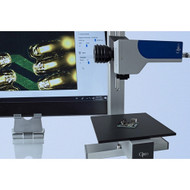
Selecting the Right Microscope for PCB Rework and Microelectronics Packaging
Feb 12th 2026
PCB rework and microelectronics packaging require extreme precision. As electronic components continue shrinking and circuit boards become more complex, selecting the right microscope is essential for accuracy, productivity, and quality control.
Whether you are repairing fine pitch solder joints, inspecting microchips, or working on advanced packaging applications, the right microscope setup can make all the difference.
Why Microscopes Are Critical for PCB Rework and Packaging
Modern electronics manufacturing involves tiny components such as:
- Surface mount devices (SMDs)
- Ball grid array (BGA) packages
- Fine pitch connectors
- Microelectronic assemblies
These parts often cannot be inspected properly with the naked eye.
A microscope helps technicians perform tasks like:
- Soldering and desoldering miniature components
- Inspecting solder joints for cracks or voids
- Verifying correct component placement
- Supporting quality assurance documentation
For high density boards and packaging environments, magnification and clarity are not optional.
Key Features to Consider When Choosing a Microscope
Not every microscope is built for electronics work. PCB rework microscopes must provide the right balance of magnification, working distance, and comfort.
1. Stereo Microscopes vs Digital Microscopes
One of the first decisions is whether you need an optical stereo microscope or a digital microscope.
Stereo Microscopes (Optical)
Stereo microscopes provide true depth perception. This is especially important for soldering and hand coordination.
Best for:
- Real time PCB rework
- Manual soldering
- Precision component placement
Digital Microscopes
Digital microscopes display the image on a screen. They are useful for training, documentation, and inspections.
Best for:
- Capturing photos and video
- Team collaboration
- Quality assurance reporting
Many electronics labs use stereo microscopes for rework and digital systems for inspection.
2. Magnification Range for PCB Rework
Higher magnification is not always better.
A practical magnification range for PCB work is typically:
- 5x to 40x
This range allows technicians to view the full work area while still zooming in for fine solder joints.
Too much magnification reduces the field of view and can make tool handling more difficult.
3. Working Distance and Clearance
PCB rework involves soldering irons, tweezers, hot air tools, and probes.
A microscope should provide:
- Long working distance (often 100mm or more)
- Enough space to work comfortably under the lens
Without proper clearance, rework becomes awkward and unsafe.
4. Lighting and Illumination Quality
Electronics surfaces are reflective. Poor lighting can cause glare that hides defects.
Look for microscopes with:
- Adjustable LED ring lights or polarizing LED ring lights
- Directional illumination
- Optional polarized lighting for glare reduction
Lighting is one of the most important factors for clear inspection of solder joints.
5. Ergonomics for Long Rework Sessions
PCB rework and packaging can take hours. Ergonomics matter as much as optics.
Helpful ergonomic features include:
- Adjustable viewing angles
- Comfortable eyepiece height
- Stable boom stands for larger boards
- Reduced eye strain design by utilizing a monitor
A comfortable setup improves productivity and reduces technician fatigue.
6. Camera Options for Documentation
Many microelectronics facilities require documentation for traceability.
A microscope with a camera system can support:
- Inspection reports
- Training materials
- Remote review and collaboration
A trinocular stereo microscope is often the best option when documentation is needed without sacrificing optical clarity.
Best Microscope Types for Common Electronics Applications
Here is how to match microscope type to workflow:
PCB Rework and Soldering
Recommended:
- Stereo zoom microscope
- Long working distance
- Adjustable LED lighting
Microelectronics Packaging and Assembly
Recommended:
- High resolution stereo microscope
- Precision zoom optics
- Camera support for inspection
Inspection and Quality Assurance
Recommended:
- Digital microscope systems
- Large monitor viewing
- Image capture and measurement tools
Choosing the Right Microscope for Electronics Work
Selecting the right microscope for PCB rework and microelectronics packaging comes down to a few essential priorities:
- True depth perception for hands on work
- Practical magnification range
- Long working distance for tool access
- Strong illumination for reflective surfaces
- Ergonomic comfort for extended use
- Optional camera integration for documentation
Investing in the right microscope improves accuracy, reduces rework errors, and supports high quality electronics production.
Explore PCB Rework Microscopes at Microscope World
Microscope World offers stereo and digital microscope solutions designed for PCB repair, electronics inspection, and microelectronics packaging applications. Contact Microscope World for a quote.


