
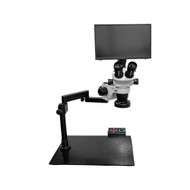
Microscopy in Food Safety: Detecting Contaminants, Defects, and Microstructures in Production Facilities
Apr 10th 2026
Food safety is more critical than ever. With increasing regulatory scrutiny and consumer awareness, manufacturers must ensure that every product leaving their facility meets the highest standards of quality and safety. While traditional inspection methods play an important role, they often fall short when it comes to identifying microscopic contaminants and structural defects.
This is where microscopy becomes an essential tool.
Why Microscopy Matters in Food Safety
Many of the most serious food safety risks are invisible to the naked eye. Bacteria, foreign particles, and subtle structural inconsistencies can all compromise product quality and safety without obvious warning signs.
Microscopy allows manufacturers to:
- Detect contaminants at the micro and nano scale
- Analyze product structure and consistency
- Investigate the root cause of defects
- Verify cleaning and sanitation effectiveness
By integrating microscopy into quality control processes, facilities can move from reactive problem-solving to proactive prevention.
Detecting Contaminants
One of the primary applications of microscopy in food production is the identification of contaminants. These can include:
Biological Contaminants
Microscopy enables the detection and identification of microorganisms such as bacteria, yeast, and mold. Techniques like fluorescence microscopy can highlight specific pathogens, helping teams respond quickly to potential hazards.
Foreign Particles
Glass fragments, metal shavings, plastic debris, and other foreign materials can enter the production line at various stages. Microscopes allow quality teams to:
- Identify the material type
- Trace the source of contamination
- Implement corrective actions
Chemical Residues
Certain microscopy methods can also help visualize residues from cleaning agents or processing chemicals, ensuring compliance with safety standards.
Identifying Defects in Food Products
Not all quality issues are related to contamination. Structural defects can impact texture, shelf life, and overall product performance.
Microscopy helps identify:
- Crystallization issues in sugars and fats
- Air pockets or inconsistencies in baked goods
- Emulsion instability in sauces and dressings
- Protein aggregation in dairy and meat products
By understanding these defects at a microscopic level, manufacturers can fine-tune formulations and processing conditions.
Analyzing Microstructures
The microstructure of a food product directly influences its taste, texture, and stability. Microscopy provides detailed insight into how ingredients interact and behave during processing.
For example:
- Fat distribution in chocolate affects mouthfeel and melting behavior
- Gluten network formation determines bread elasticity and structure
- Ice crystal size impacts the texture of frozen products
Advanced imaging techniques, such as scanning electron microscopy (SEM), offer high-resolution views that reveal structural details critical to product optimization.
Supporting Sanitation and Process Validation
Microscopy is also a powerful tool for verifying cleaning protocols and monitoring production environments.
Facilities can use it to:
- Inspect surfaces for residual biofilms
- Validate sanitation effectiveness
- Monitor wear and damage on equipment surfaces
This level of analysis helps reduce the risk of cross-contamination and ensures compliance with industry regulations.
Integrating Microscopy into Production Workflows
To fully leverage microscopy, food manufacturers should consider:
- Establishing routine microscopic inspections as part of quality control
- Training staff to interpret microscopic findings
- Partnering with specialized laboratories for advanced analysis
- Investing in the right equipment based on production needs
When implemented effectively, microscopy becomes more than a diagnostic tool. It becomes a strategic asset for continuous improvement.
The Future of Microscopy in Food Safety
As technology evolves, microscopy is becoming faster, more automated, and more accessible. Digital imaging, AI-assisted analysis, and real-time monitoring are transforming how production facilities approach quality assurance.
These advancements will enable:
- Faster detection of contaminants
- More consistent product quality
- Reduced waste and recalls
- Greater consumer trust
Strengthening Food Safety with Microscopy
Microscopy plays a vital role in modern food safety by revealing what cannot be seen through conventional inspection methods. From detecting contaminants to optimizing product structure, it empowers manufacturers to maintain high standards and stay ahead of potential risks.
For food production facilities aiming to enhance quality, ensure compliance, and protect their brand, microscopy is no longer optional. It is essential.


