
Your shopping cart is currently empty.
Microscopes for Coin Collectors
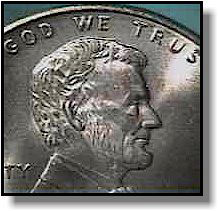 A coin microscope can help you examine your coins for defects, scratches and irregularities. But what can you see with a coin microscope? A coin microscope may help you view residues of cleaning materials or brush fibers stuck in cracks on the coin. Ancient bronze coins might have microscopic lead pockets. Fine red fibers usually mean the coin spent some time in a flocked tray. Seams and file marks on the edges may help define authenticity. Random scratches are usually from normal use. Scratches following a pattern suggest the coin was cleaned on a buffer or by hand.
As you increase magnification on the coin microscope, you will see a smaller field of view.
Don't get a coin microscope with too much magnification! For coins, a good range of magnification is 10x-30x. The image at right shows a penny at 20x magnification.
View pennies captured at different magnifications here.
| Recommended Coin Collecting Microscopes |
S2D-SPS Digital 10x / 30x Stere
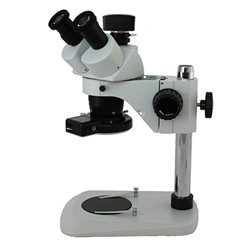 o Microscope
- 10x & 30x Magnification
- LED Ring Light for illuminating coins
- Digital Camera with Software
- View Live Images
- Capture and save images, make measurements
- Includes black/white stage plate to provide contrast for coins
- Choice of 3mp or 5mp camera
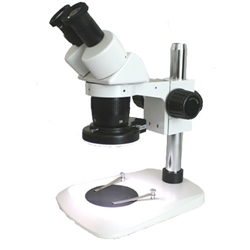 S2-SPS 10x / 30x Coin Stereo Microscope
- 10x & 30x Magnification
- LED Ring Light for illuminating coins
- Includes black/white stage plate to provide contrast for coins
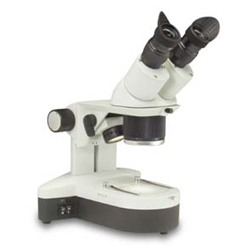 MW3-L9 10x-30x Zoom Stereo Microscope
- Zoom magnification of 10x-30x
- If additional eyepieces are purchased 15x-45x magnification is possible.
- Built-in top and bottom illumination
- Includes glass stage plate and black and white stage plate for coin contrast
- Zoom magnification allows continuous magnification through the range
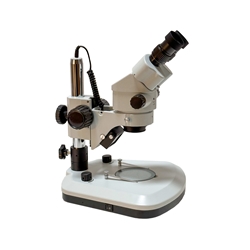 S6-ILS2 Zoom Stereo Microscope 7x-45x
- Zoom magnification of 7x-45x
- Built-in top and bottom LED illumination
- Zoom magnification allows continuous magnification through the range
- Wide range of magnification makes viewing coin defects simple, quickly zoom out to view entire coin, or zoom in to view details
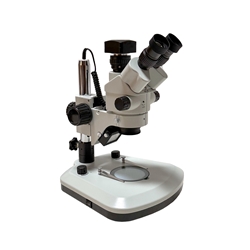 S6D-ILS2 Zoom Stereo Digital Coin Microscope 7x-45x
- Zoom magnification of 7x-45x
- Built-in top and bottom LED illumination
- Zoom magnification allows continuous magnification through the range
- Wide range of magnification makes viewing coin defects simple, quickly zoom out to view entire coin, or zoom in to view details
- Digital Camera with Software
- View Live Images
- Capture and save images, make measurements
- 5mp camera