Your shopping cart is currently empty.
Petrology, Geology & Polarizing Microscopes
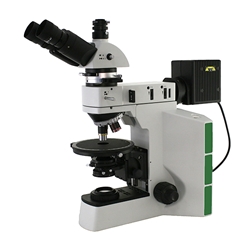
Microscope World offers petrology, geology and polarizing microscopes that feature polarizing light with transmitted and incident illumination. A petrologist uses microscopes and chemical tests to determine the nature of rocks and minerals. Microscope examination of a rock specimen mounted on a thin section slide is the principle technique used to identify the rock specimen. Further study can determine the components and features of the rock along with its composition, how it was formed and the geological setting of the rock.
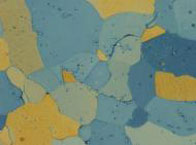 Polarizing microscopes are also known as petrographic microscopes and is a type of compound microscope. The polarizing microscope is the perfect choice for viewing birefringent materials with an optical technique using polarized light. Polarizing microscopes can be an upright specific polarizing microscope or a stereo microscope with added polarization. A polarizing microscope has a circular stage, polarizer and analyzer and often 1/4 λ plate, full λ plate and Bertrand lens. A stereo microscope can use polarized light by simply adding a polarizer lens over the objective lens and an analyzer over the light source. The polarizer will only allow certain light waves to pass through it. The analyzer determines the amount of light and direction of light that will illuminate the sample. The polarizer basically focuses different wavelengths of light onto a single plane. A polarizing microscope may have transmitted light only or both transmitted and reflected light. Polarizing microscopes are used in the field of geology, pharmaceuticals, chemistry, medicine and metallurgy.